
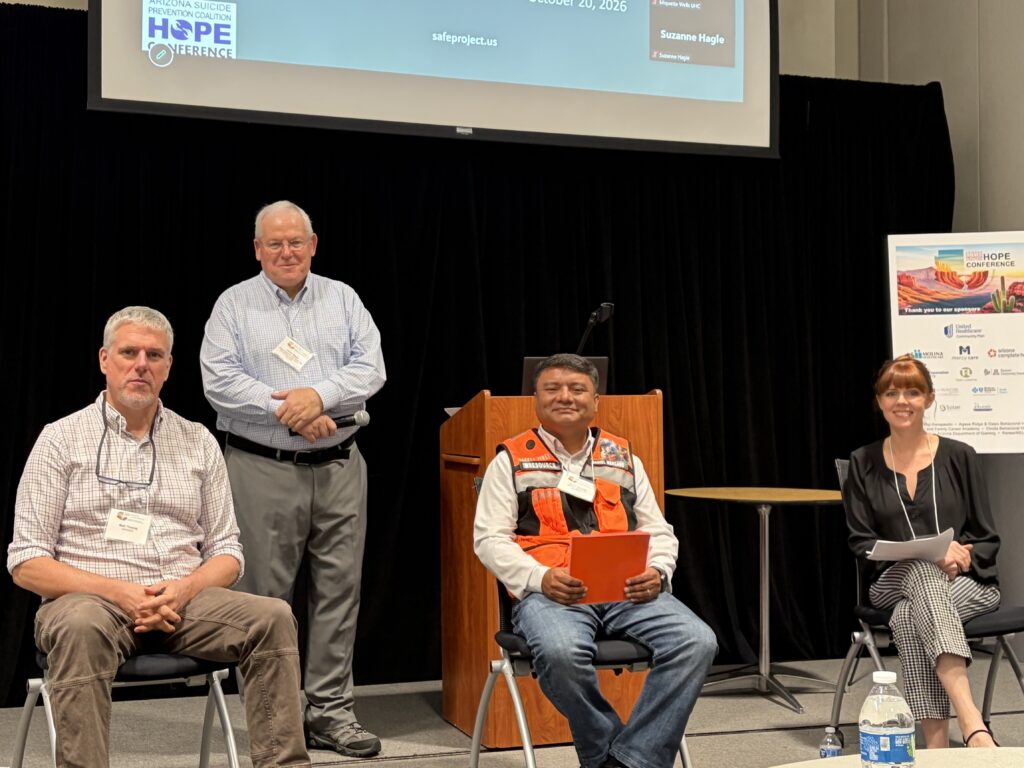
October brings World Mental Health Day and Mental Health Awareness Week, a time to break silence, reduce stigma, and have the conversations that save lives.
I recently had the privilege of speaking at the HOPE Conference on this very topic, and since then I’ve been reflecting on a connection that doesn’t get talked about nearly enough in workplace settings: the relationship between opioid use disorder and suicide risk.
Two Crises, One Conversation
Opioid use disorder and suicide are too often treated as separate issues, handled by different departments, addressed by different programs, discussed in different rooms. But the data tells a different story. Research consistently shows that people living with substance use disorder face a significantly elevated risk of suicide. The reasons are interconnected: chronic pain, isolation, shame, stigma, financial stress, and the neurological effects of opioids on the brain’s reward and mood systems all compound one another in ways that can make a person feel utterly without hope.
When someone is struggling with opioid use disorder, they are not just fighting addiction. They are often fighting depression, anxiety, trauma, and the crushing weight of feeling like a burden, to their families, their coworkers, and themselves. When the workplace fails to create space for that person to ask for help, it can quietly push them further toward the edge.
The Workplace as a Lifeline
Here is what I believe — and what the evidence supports: the workplace can be one of the most powerful intervention points we have.
Think about it. Most people with substance use disorder are employed. They are showing up every day, sometimes barely holding on, and the environment they walk into matters enormously. A workplace where a supervisor notices a change in behavior and responds with curiosity rather than judgment. A culture where an employee can quietly reach out to HR without fear of losing their job. A policy that says “we will help you get treatment” rather than “we will fire you.”
These are not small things. These are the kinds of conditions that give people a reason to stay.
What Stigma Costs Us
Stigma is not just uncomfortable. It is deadly. When employees believe that disclosing a struggle with opioids will cost them their career, they stay silent. Silence breeds isolation. Isolation is one of the strongest predictors of suicide risk.
Every time a workplace creates a culture where people feel safe enough to say “I need help,” it is doing something that no hotline number alone can do. It is saying: you matter here, and we are not going to let you disappear.
What Employers Can Do Right Now
This does not require a massive budget or a complete cultural overhaul. It starts with awareness and it starts with leaders who are willing to talk about it.
Practically, that looks like training supervisors to recognize warning signs and respond with compassion. It looks like reviewing your drug and alcohol policy to make sure it offers a pathway to treatment, not just a pathway to termination. It looks like making sure every employee knows where to find help, and believes they can ask for it without consequences.
It also looks like keeping Narcan on hand. Because sometimes the most important thing we can do is make sure someone survives long enough to get the support they need.
How You Can Take Action
Speaking at the HOPE Conference this October on the intersection of opioid use disorder and suicide prevention was both humbling and urgent. If your organization hasn’t started this conversation yet, there’s no better time to begin than now. Your employees are waiting for someone to open the door. Be the one who does.
Valley Leadership’s free Opioid Business Toolkit gives Arizona employers the resources to build recovery-friendly workplaces — including employee education, supervisor training, policy support, and Narcan awareness. Learn more at oudbiztoolkit.org.
If you or someone you know is struggling, the 988 Suicide & Crisis Lifeline is available 24/7 — call or text 988. being recovery-friendly, they become part of a larger network that support people in their recovery.
Authored by Kate Kucharski
Kate Kucharski is a human resources professional with more than 15 years of executive leadership experience in the roofing and hospitality sectors, bringing deep expertise in workforce strategy, compliance, and organizational culture. She currently serves as Director of Business Engagement & Wellbeing at Valley Leadership, where she partners with Arizona employers to strengthen workplace practices that support employee wellbeing. In this role, Kate leads employer outreach and partnerships for Valley Leadership’s Opioid Business Toolkit, a grant-funded initiative designed to help organizations reduce stigma around substance use disorders, implement supportive policies, and connect employees and their families to critical resources. She works closely with business leaders, HR teams, and industry associations across Arizona to expand awareness, provide practical HR guidance, and promote recovery-friendly workplace practices.